Military PCS & Hawaiʻi pet travel
PCSing to Hawaiʻi with pets: blood tests, quarantine options, and what to expect
A practical PCS guide to Hawaiʻi pet entry: FAVN blood testing, Direct Airport Release, 5 Day Or Less, quarantine, neighbor-island arrivals, and military resources.
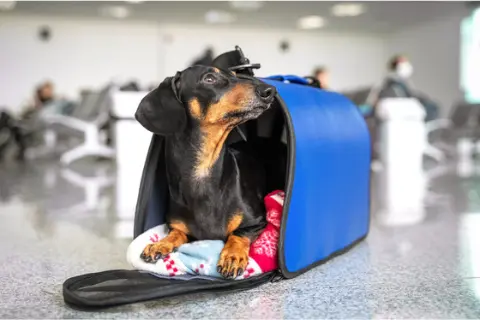
The least stressful outcome is usually decided months before the flight. Hawaiʻi is rabies-free, so PCS orders do not automatically waive the state’s dog-and-cat entry rules. With the right sequence of microchipping, rabies vaccines, a passing FAVN blood test, waiting periods, documents, and arrival planning, many pets can qualify for release after inspection instead of a long quarantine.
First: what the “blood test” actually is
The test is the FAVN rabies antibody blood test. It measures whether a vaccinated dog or cat has an acceptable rabies-antibody response. It is not a substitute for rabies vaccination, and the order of events matters.
- Microchip first. The pet must be microchipped before the blood sample is drawn. The veterinarian should scan the chip and verify the number because a pet that cannot be identified by its microchip will not qualify for Direct Airport Release or 5 Day Or Less.
- Two rabies vaccinations. The pet must have received at least two rabies vaccinations in its lifetime, given more than 30 days apart. The most recent vaccine must be current and given more than 30 days before arrival.
- Use an approved FAVN laboratory. Hawaiʻi accepts results from the laboratories listed in its official guidance. “HAWAII” should be identified as the destination on the submission form.
- Meet the result and timing requirements. The result must be at least 0.5 IU/mL. The pet must complete a 30-day wait from the day after the approved laboratory receives the sample. The qualifying test window is also limited, so check the current checklist if the test is more than a few years old.
The state currently warns that FAVN processing can take one to two months. That laboratory time comes before the mandatory 30-day waiting period, so “30 days” is not a safe total planning estimate.
The main arrival and quarantine outcomes
Best-prepared HNL arrival
Direct Airport Release
A qualifying dog or cat arriving at Daniel K. Inouye International Airport can be released after inspection when every requirement is met, required documents and payment are submitted on time, and the pet reaches the inspection facility during operating hours.
Current state fee: $185 per pet.
Shortened quarantine
5 Day Or Less
This program is for pets that meet the shortened-program requirements but are not released directly at the airport. The stay can be up to five days while eligibility and release requirements are completed.
Current state fee: $244 per pet.
Arriving before eligible date
Early-arrival holding
A pet arriving before the 30-day FAVN wait is complete is disqualified from Direct Airport Release and 5 Day Or Less at arrival. In Honolulu, the state lists a daily charge until the eligible date in addition to the program fee.
Current listed charge: $14.30 per early day plus $244.
Requirements not met
Up to 120 days
Dogs and cats that do not meet the specific shortened-program requirements may be quarantined for up to 120 days or transported out of state at the owner’s expense. This can also affect puppies and kittens that are too young to complete the full sequence.
Current state fee: $1,080 per pet.
If you are going to Maui, Kauaʻi, or Hawaiʻi Island
Direct arrival at Kona (KOA), Kahului (OGG), or Līhuʻe (LIH) is a separate path—not simply the Honolulu process at a different airport. You need a Neighbor Island Inspection Permit, a confirmed reservation with an approved private veterinary facility, a passing FAVN result, and the documents required by Checklist 2.
The state says neighbor-island documents should be received 30 days or more before arrival. The current permit fee is $165 per pet, and the contracted veterinary inspection has its own fee. The printed permit must be presented to the airline. If the process is incomplete, the pet can be denied entry and sent to Honolulu or out of state at the owner’s expense.
Do not book a neighbor-island pet itinerary until the checklist, approved veterinarian, and permit timing all line up.
A PCS timeline that leaves room for delays
As soon as you receive assignment notification
- Tell your transportation office that you plan to move a dog or cat.
- Confirm your destination island, arrival airport, and whether Patriot Express or commercial travel is likely.
- Ask the destination housing office about pet-number, breed, size, and registration rules before accepting housing.
- Scan the microchip and compare the number across veterinary and registry records.
- Review rabies vaccination dates with a veterinarian who understands Hawaiʻi entry.
Several months before travel
- Complete any missing rabies vaccine in the correct sequence.
- Have the FAVN sample sent to an approved lab and retain a copy of the passing result.
- Allow for the state-reported one-to-two-month lab delay plus the mandatory 30-day wait.
- Request pet space early. Military OneSource says Patriot Express reservations may be requested 90–120 days before departure and space is limited.
- Check crate, combined weight, breed, heat, route, and connection rules directly with the operating airline.
At least 30 days before a direct neighbor-island arrival
- Use Checklist 2 and apply for the Neighbor Island Inspection Permit.
- Contract with an approved arrival veterinarian and make sure the state receives confirmation.
- Keep the printed permit with the travel documents presented to the airline.
Within 14 days of arrival
- Obtain the original health certificate in English with the required vaccine details.
- Have a veterinarian apply an approved long-acting tick treatment and record the product and date on the health certificate.
- Reconfirm the flight, inspection hours, crate rules, and final-mile vehicle.
No less than 10 days before an HNL arrival
Submit the required application, two rabies certificates, supporting documents, and payment using the current state process. Hawaiʻi now offers an online pet-import portal, but the official checklist still controls which documents and originals are required and when.
What arrival day may look like at HNL
Airline personnel transport the pet to the Airport Animal Quarantine Holding Facility for inspection. The state’s checklist says Direct Airport Release pets should reach the facility during normal inspection hours, currently listed as 8:00 a.m. to 4:30 p.m.; hours can change without notice.
The pet must remain in the travel crate on airport property. Bring or arrange a vehicle large enough for the intact crate, because the family is responsible for moving the crated pet from the release area and baggage carts or porters may not be immediately available.
Military travel and reimbursement: save every receipt
Pet transportation is not handled like household goods, and the family is still responsible for meeting state and airline requirements. However, current Defense Travel Management Office guidance says an eligible service member may be authorized reimbursement for qualifying pet expenses for one dog or cat, up to $550 for a CONUS move and up to $2,000 for an OCONUS move.
Hawaiʻi is a non-foreign OCONUS duty location for travel-allowance purposes, but eligibility and reimbursable expenses depend on the orders, transportation used, receipts, and current Joint Travel Regulations. Contact TMO, ITO, MPF, CPPA, or your service travel-pay office before booking. If government transportation is directed and available, failing to use it can affect reimbursement; when it is unavailable, documentation from the transportation office may be required.
- Declare the pet during assignment and port-call counseling.
- Keep itemized receipts for shipping, quarantine, required tests, microchipping, and other eligible costs.
- Ask exactly which documents must accompany the PCS travel claim.
- Budget to pay costs up front even when reimbursement may later be authorized.
Base housing and veterinary care are separate decisions
Clearing state quarantine does not guarantee that a pet is allowed in a particular government-housing community. Installation and privatized-housing policies may limit the number or type of pets and may require local veterinary registration after arrival. Check the exact community connected to your orders rather than relying on another installation’s rules.
Public Health Command-Pacific lists military veterinary facilities at Joint Base Pearl Harbor-Hickam, Fort Shafter, Schofield Barracks, and Marine Corps Base Hawaiʻi. Availability and eligibility vary, and these clinics generally do not replace an emergency veterinary hospital.
Build a “pet PCS folder” before everything is packed
- PCS orders and transportation-office instructions
- Airline confirmation and complete itinerary
- Microchip number and registry contact information
- Two signed rabies vaccination certificates
- Passing FAVN result and eligible-entry date
- Animal import application, payment confirmation, and permit if applicable
- Original health certificate and documented tick treatment
- Destination housing and veterinary contacts
- Recent full-body and face photos plus one trusted stateside and Hawaiʻi contact
Keep digital copies, but hand-carry the originals the official checklist requires. Before the flight, update the pet’s microchip registry and prepare a privacy-safe pet profile with current photos and identifying details. A move creates unfamiliar doors, temporary lodging, new caregivers, and disrupted routines—exactly when prepared information can matter most.
Sources and official planning links
Reviewed August 24, 2026. Official checklists and current orders take priority over this summary.
- Hawaiʻi Department of Agriculture and Biosecurity: Animal Quarantine Information Page
- Hawaiʻi DAB: Checklist 1 for Direct Airport Release and 5 Day Or Less at HNL
- Hawaiʻi DAB: Checklist 2 for direct arrival at Kona, Kahului, and Līhuʻe
- Hawaiʻi Animal Quarantine: online import portal
- Military OneSource: JBPHH shipping-pets information
- Military OneSource: Passenger and pet transportation for PCS moves
- Defense Travel Management Office: PCS pet transportation reimbursement
- Public Health Command-Pacific: Veterinary Readiness Activity, Hawaiʻi