Hawaiʻi & pet identification
Why Hawaiʻi needs a more connected lost-pet and microchip system
Microchips identify pets, but fragmented registries can slow reunification. See what a secure, standardized lost-pet data system should connect.
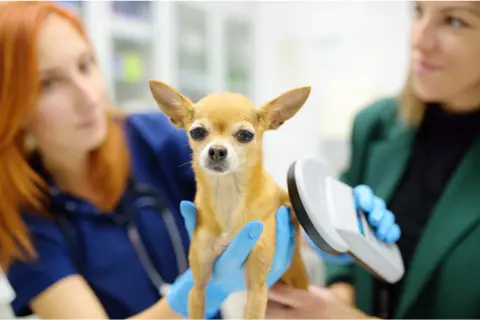
A microchip can give a pet a durable identity, but identity alone is not a complete search system. Reunification still depends on a readable chip, a registered and current record, a registry that can be located, and a person or organization completing each handoff.
A microchip is an ID number—not GPS
A pet microchip does not continuously broadcast a location. The chip stores an identification number. A veterinarian, shelter, or other organization must first scan the pet, then use that number to locate the registry that may hold the guardian’s contact information.
That distinction matters. “Microchipped” does not automatically mean “registered,” “current,” or “searchable through every service.” It also does not mean a guardian can see where a missing pet is on a map.
Four handoffs have to work
1. Scan
Someone safely contains the pet and uses a compatible scanner to read the chip number.
2. Locate
The chip number is checked to determine which registry or company may hold the record.
3. Contact
The registry uses current, verified contact information to reach the guardian or backup contact.
4. Reunite
The shelter, clinic, finder, and guardian confirm identity and arrange a safe return.
The hardware is more standardized than the records
International standards define common identification-code and radio-frequency concepts for animal microchips. But the United States still has multiple chip companies, scanners, frequencies, and registration databases. A common chip format does not create one shared owner record.
The American Animal Hospital Association’s lookup tool helps bridge that gap by checking participating registries and identifying which company should be contacted. It does not store or reveal guardian information, does not let guardians update a record, and only searches registries that participate.
Registration gaps are not theoretical
A 2009 study followed 7,704 microchipped animals entering 53 shelters. Of 1,943 cases in which a shelter contacted a microchip registry, only 58.1% were registered in that database. When an owner could not be found, common problems included incorrect or disconnected phone numbers and records registered to another organization.
This older study does not measure today’s national registration rate. It does document the failure points a modern system should be designed to prevent: missing registration, stale contact information, unclear record ownership, and incomplete access across registries.
What a standardized lost-pet system should connect
Standardization does not have to mean replacing every registry with one vendor. A safer goal is interoperability: shared field definitions and secure ways for authorized systems to confirm and route the same pet identity.
- A normalized microchip number and the registry responsible for the current record
- Species, current photos, identifying markings, and only the safety information needed for recovery
- An active, updated, or resolved missing-pet status with clear timestamps
- Last-seen time and location with guardian-controlled public precision
- A verified contact relay and trusted backup contact without exposing private details
- Links to the appropriate island or county lost-and-found report
- Record provenance, update history, expiration rules, and a way to correct errors
Privacy must be part of the standard
A standardized database should not become a public directory of guardian names, home addresses, phone numbers, medical records, or precise household locations. The public needs enough information to recognize a pet and submit a useful sighting—not unrestricted access to the family behind the record.
A trustworthy design would include:
- Consent-based sharing and private-by-default pet profiles
- Role-based access for guardians, shelters, veterinary teams, and authorized animal services
- Masked contact relays instead of publicly displayed personal information
- Audit logs, rate limits, verification, correction procedures, and abuse reporting
- Automatic expiration or review of stale missing-pet alerts
What guardians can do now
- Ask a veterinary clinic or shelter to scan the chip and confirm the full number.
- Use the AAHA lookup tool to identify the associated registry.
- Confirm the registry has current phone, email, address, and trusted backup information.
- Recheck after moving, changing phone numbers, transferring ownership, or before high-risk events such as fireworks and severe weather.
- Keep visible identification and recent pet photos as additional layers.
- If a pet is missing, file the official local report; do not rely on the chip or a social post alone.
On Oʻahu, the Hawaiian Humane Society’s Lost Pet Report is separate from a microchip registry record. Homeward Pet can organize identifying details and alert materials, but it does not currently scan chips, update a microchip registry, search private registry records, or send reports automatically to Hawaiian Humane, veterinary clinics, or animal control.
The opportunity
Hawaiʻi already recognizes the value of permanent pet identification. The next step is making the information around that identity easier to verify, update, and route across organizations—without sacrificing family privacy.
One pet identity. Clear handoffs. Less searching between systems.
Sources
Reviewed August 24, 2026.
- AAHA: Universal Pet Microchip Registry Lookup Tool
- AAHA: Animal identification and microchipping position statement
- AVMA: Microchipping FAQs for pet owners
- Lord et al. (2009): Microchipped animals entering animal shelters
- Hawaiʻi Revised Statutes § 143-2.2: Microchip identification
- Hawaiian Humane Society: Pet microchip identification
- Spectrum News Hawaiʻi: Local microchip and fireworks guidance
- Hawaiian Humane Society: Oʻahu Lost Pet Report